
Seasonal Produce
Seasonal Vegetables and the Nutritionist's Field Record
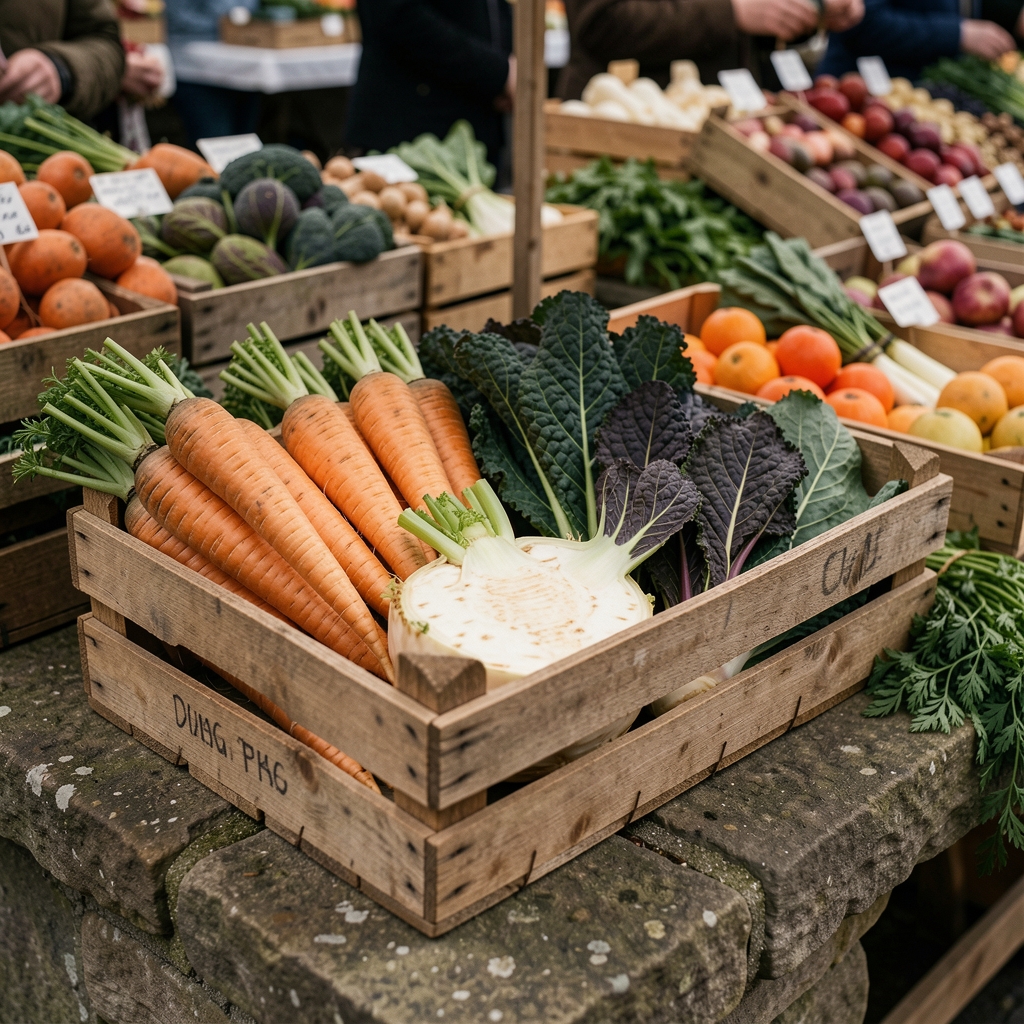
Observations from a spring produce log: how leaning into seasonal variety altered portion instincts and broadened the range of whole foods on the weekly table.
There is a particular quality of attention that arrives when one begins to observe — not to alter — the week's eating. A week is long enough to contain variation, short enough to hold its shape in memory. What follows is drawn from a twelve-week observational log, sustained without any prescribed directive, to understand what the ordinary week of food choices looks like when it is simply recorded.
The week, as an organising unit for eating, is underexamined in much nutritional writing, which tends to focus either on the single meal or on the macro-arc of months. Yet it is the week that most people navigate in practice: the workday pattern, the weekend departure from that pattern, the Monday return. In the log, this rhythm was immediately legible. Weekday lunches were simpler — often a single-ingredient grain paired with whatever was at hand from the previous evening. Weekend meals took longer, used more variety, and tended to include more vegetables and fruit.
What became apparent, over the course of the twelve weeks, was that weight awareness — not weight loss as a goal, but the felt sense of one's body weight as a stable or shifting presence — tracked fairly closely with the character of the week's eating rather than with any single meal or day. The weeks in which eating had a loose but discernible structure tended to produce a steadier sense of weight. The weeks of disruption — travel, late working, a series of social engagements — produced the sensation of instability, even when the actual intake of food was not dramatically different.
This is not a surprising finding from a nutritional standpoint, but it is one that bears returning to because it sits at a remove from how weight is typically discussed. The conversation tends to emphasise the singular dramatic change — the elimination of a food group, the adoption of a new protocol — rather than the quieter observation of what patterns already exist and where they naturally shift.
"The weeks in which eating had a loose but discernible structure tended to produce a steadier sense of weight — not as a number but as a felt quality of the body."
One of the quieter observations from the log was the relationship between whole foods — foods close to their unprocessed form — and the sense of satiety that followed from them. In weeks dominated by home-cooked meals from whole ingredients, the log entries for hunger and afternoon fatigue were noticeably less frequent. In weeks where time pressure increased reliance on prepared or packaged foods, those entries appeared more often.
This is consistent with published dietary research on fibre, protein density, and the relationship between food processing levels and the body's responses to eating. But in the observational register, it presented itself less as a biochemical mechanism and more as a texture of daily life. The days built around whole foods had a particular quality — not virtuous, not effortful — simply more settled. Meals felt finished. Hunger arrived on a more predictable schedule.
Whole foods, in this context, did not mean a rigorous exclusionary framework. It meant, in practical terms: more vegetables across more days, legumes appearing at least twice in the week, fruit as a habitual presence rather than an occasional addition. The contrast was not with the presence of any particular "bad" food but with the relative absence of variety and density that sometimes characterised the busier weeks.

Portion awareness — a phrase that has been colonised, in many nutritional contexts, by the apparatus of weighing and measuring — arrived in the log through a different route: the observation of what remained on the plate after eating. Over several weeks, a pattern emerged. When the meal had been assembled from whole ingredients with a clear variety of components, something close to the right amount had been prepared. When the meal was more repetitive or lacking in variety, it was easier to eat past satisfaction.
This is partly a function of attention. A meal that asks for a little more consideration in its making — the choice of which vegetables, the proportion of protein to grain — also tends to be eaten with slightly more attention. Not in a laborious way; simply in the way that a thing one has put some thought into tends to be engaged with more fully.
The literature on mindful eating touches on this, though it often frames it as a discipline or technique to be applied to eating. What the log suggested was that it is more naturally a consequence of a certain approach to cooking and to the week's food planning — one that does not require a separate practice, only a slightly different orientation toward what is already being done.
Food journalling — keeping a written record of what is eaten — carries a reputation in popular nutrition discourse as a tool of calorie counting, a mechanism of restriction. This is a narrow reading of what the written record can offer. The log in this case was not a tally of nutrients but a set of brief, plain notations: what was eaten, when, and occasionally a word or two about the surrounding context or feeling.
Over twelve weeks, the log became most useful not as a record of individual meals but as a way of seeing patterns that were not visible inside the week. Which kinds of weeks produced a particular kind of eating? What preceded the weeks of disruption? Was there a day of the week — typically Thursday or Friday in the case of this log — where the eating pattern began to shift, before the weekend adjustment became its own thing?
These were the questions that emerged from the written record, not from any attempt to control or correct it. The journalling was observational in a non-specialist sense: it allowed the week to be seen more clearly, which in itself produced a change in how it was approached the following week.
The editorial premise of this log was always observation before directive. What the twelve weeks offered, in that spirit, was a tentative picture of how gradual weight change — the kind that occurs over months rather than weeks — might be understood not as the product of a specific intervention but as a consequence of the overall character of one's food week.
The weeks with more structure, more variety, more whole foods, and a closer relationship between cooking and eating produced a body that felt more settled. They were also, it should be said, the more enjoyable weeks — not because eating became a performance of nutritional virtue but because the food itself was more interesting, more varied, and more present as an experience. The plate, when attended to, becomes more than a vehicle for nutrients. It is the day's most legible record of how time was spent.
Gradual weight change, seen from this angle, is not so much a goal to be pursued as a result of the week being organised around food in a particular way. Whether that is a useful reframing depends on what question one is asking. For those asking why the scale moves in one direction over months, the answer may lie less in the contents of any single meal and more in the accumulated character of the week — its rhythm, its structure, and whether what was put on the plate bore any relationship to what was actually wanted.

Eleanor Whitfield is the founding editor of Flatoren Compendium. She writes on nutrition practices, food patterns, and weight awareness from an observational, evidence-informed perspective.
More from this writer →
Observations from a spring produce log: how leaning into seasonal variety altered portion instincts and broadened the range of whole foods on the weekly table.
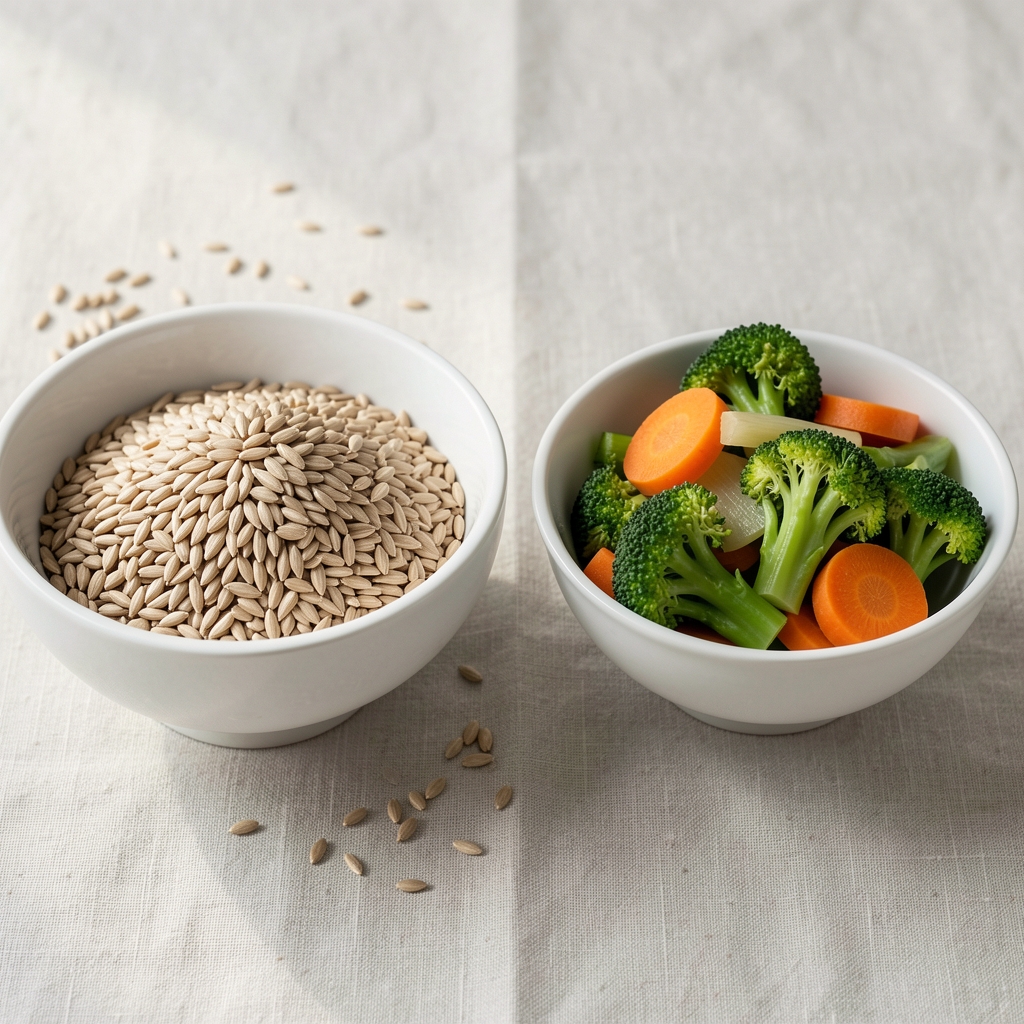
Field notes on the relationship between regular physical activity and the eating patterns that surround it — what changes when movement becomes habitual.